Architect of SiteNeuro · Author

Saygin Celen

I build AI products with specs and Claude. I'm not a developer.

I built SiteNeuro, an AI growth system that has built 1,000+ websites, and I write down the method every week for people who don't code.

Spec-Driven Development AI Products Claude UI Design

I'm a mechanical and industrial engineer with an MBA, and spent more than ten years as a UI designer, writer and business development consultant. In 2026 I built SiteNeuro with Claude and written specs, then wrote the method down in Build Your AI Platform.

Standout
Building products from zero to impact
Start here
In Their Words

What People Say

SITENEURO

What I've built

SiteNeuro is an AI growth system: it builds a business's website from its own information in about a minute, then keeps it growing. This site was built with it.

SiteNeuro

SiteNeuro

Websites built from a business's own information in about a minute, then kept growing by its AI. 1,000+ built since launch.

Read more Show less

SiteNeuro has been live since August 2026 and has built more than 1,000 websites. I'm not a developer: I built it with Claude and written specs, starting in March 2026. Each site starts from a business's own information, and its AI keeps it growing after launch.

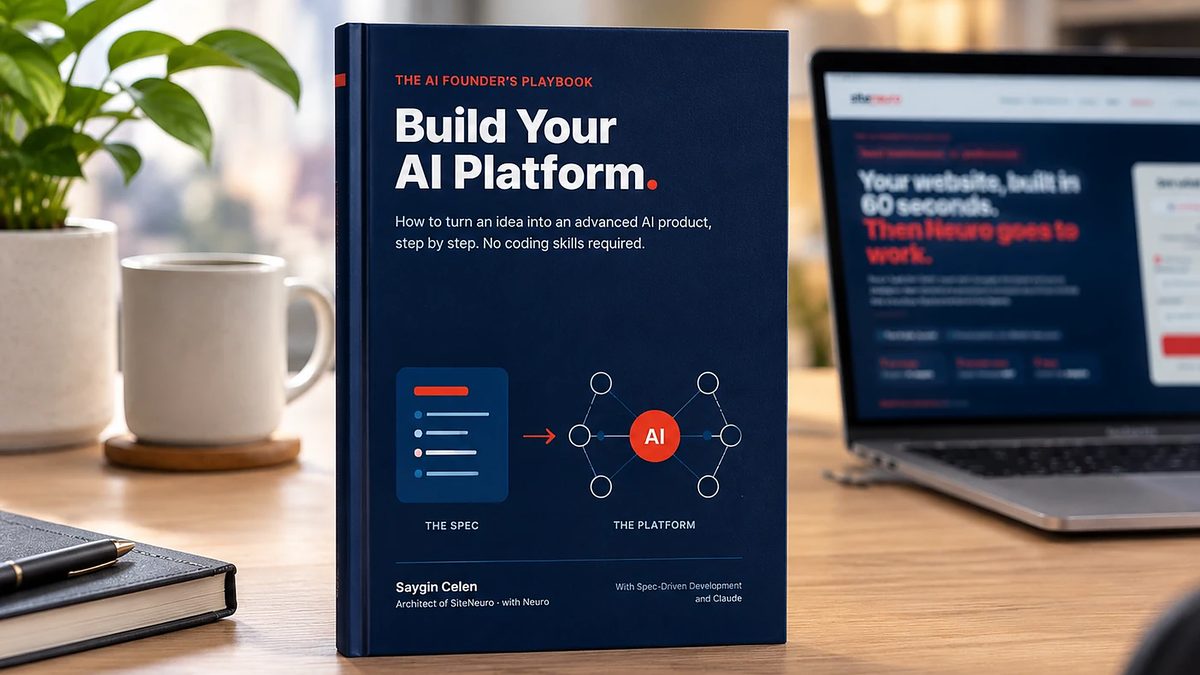
Build Your AI Platform

Build Your AI Platform

The method I used, written for people who don't code: 29 chapters, three complete builds and a 30-day challenge.

Read more Show less

Build Your AI Platform is the method behind SiteNeuro, written for people who don't code. It runs 29 chapters in five levels, walks through three complete builds and ends with a 30-day build challenge. Chapter 1 is free to read.

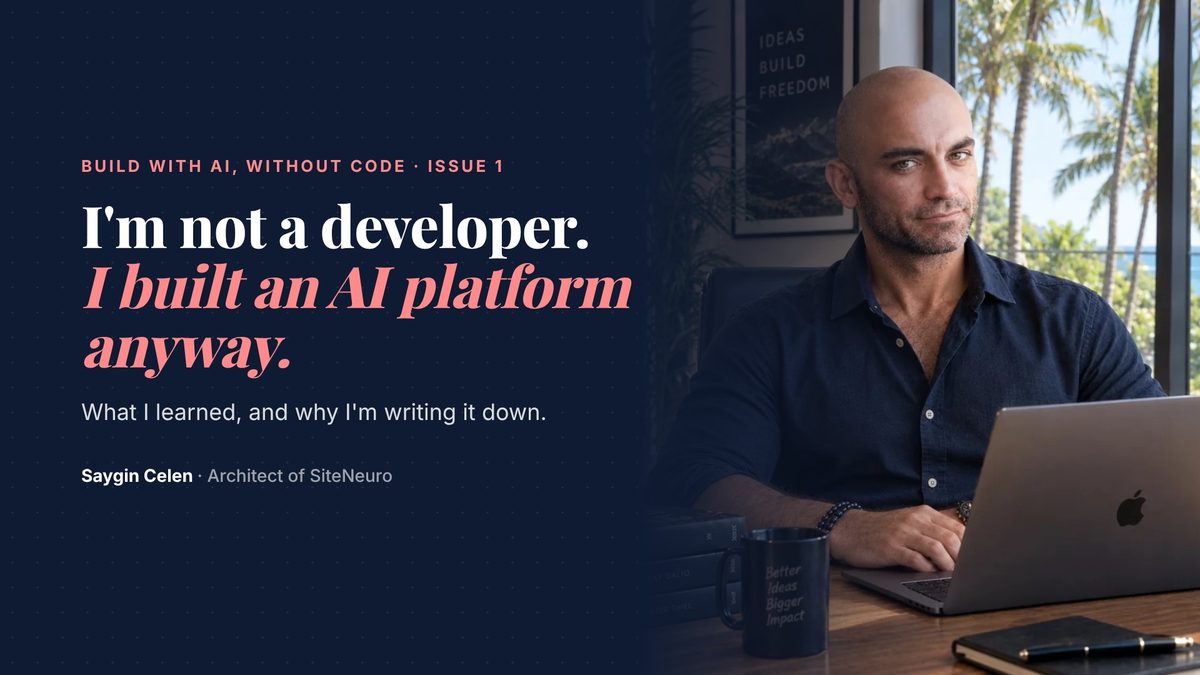
Build With AI, Without Code

Build With AI, Without Code

My weekly LinkedIn newsletter: how to build with AI when you don't code, the tools worth your time, and the AI news that matters.

Read more Show less

Build With AI, Without Code comes out on LinkedIn every Monday; Issue 1 was published on October 27. Each issue is one practical lesson on building with AI when you don't code, plus the tools worth your time and the AI news that matters.

SiteNeuro, in action

What specs and Claude built

I'm not a developer. These are real screens from SiteNeuro, the AI growth system I built with written specs and Claude.

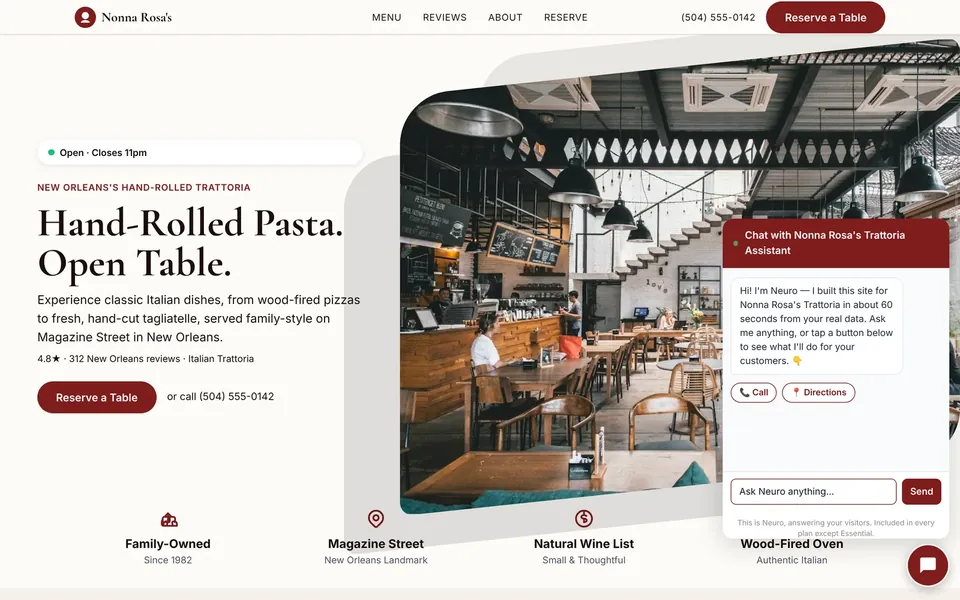
A website, built in about a minute

A website, built in about a minute

An example restaurant site, built from the business's own photos and Google reviews, with table booking built in.

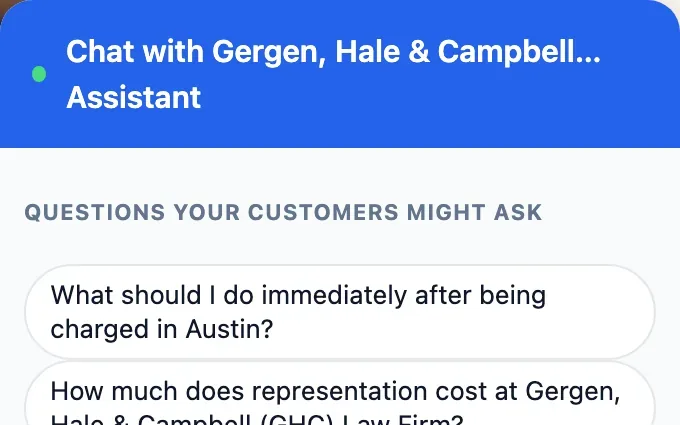
Neuro answers visitors

Neuro answers visitors

Every site comes with Neuro, an assistant that answers visitors' questions from what the business knows and passes new enquiries on.

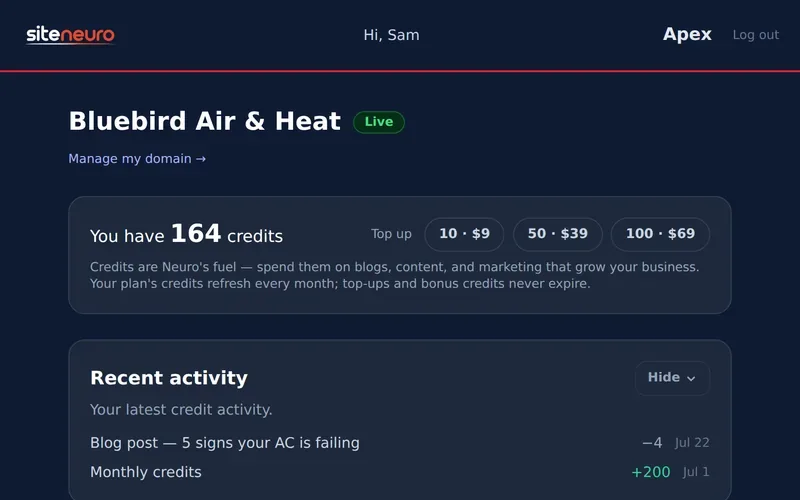
One dashboard for the owner

One dashboard for the owner

Owners publish blog posts, social posts and newsletters from one place, and see how their site is growing.

About
Building Smarter, Growing Faster, Making Impact

I am Saygin Celen, an engineer by training who found a passion for UI design, web writing, and entrepreneurship. My journey has led me to found Awaynear, a venture dedicated to helping startups and innovators thrive by integrating design, AI, and strategic thinking.

I simply love design thinking and creating products from zero to deliver the most value for the end user. That passion fuels everything we build.

My approach is rooted in understanding the core problem and applying a blend of technical expertise, creative design, and strategic foresight to build solutions that truly resonate and drive growth.

Focus

What I Work On

01

Web Design Writing

Crafting compelling web content that not only informs but also engages users and drives desired actions, integrating SEO best practices.

02

AI Strategy Integration

Developing and implementing AI-driven strategies to enhance product functionality, user experience, and operational efficiency for startups.

03

Product Development

Leading the end-to-end process of building new products, from initial concept and design to development and market launch, with a focus on user value.

04

Startup Growth

Advising and implementing strategies for startups to accelerate their growth, focusing on scalable solutions and impactful market positioning.

Field Notes

Field Notes

Featured

Saygin Celen on Social

Instagram
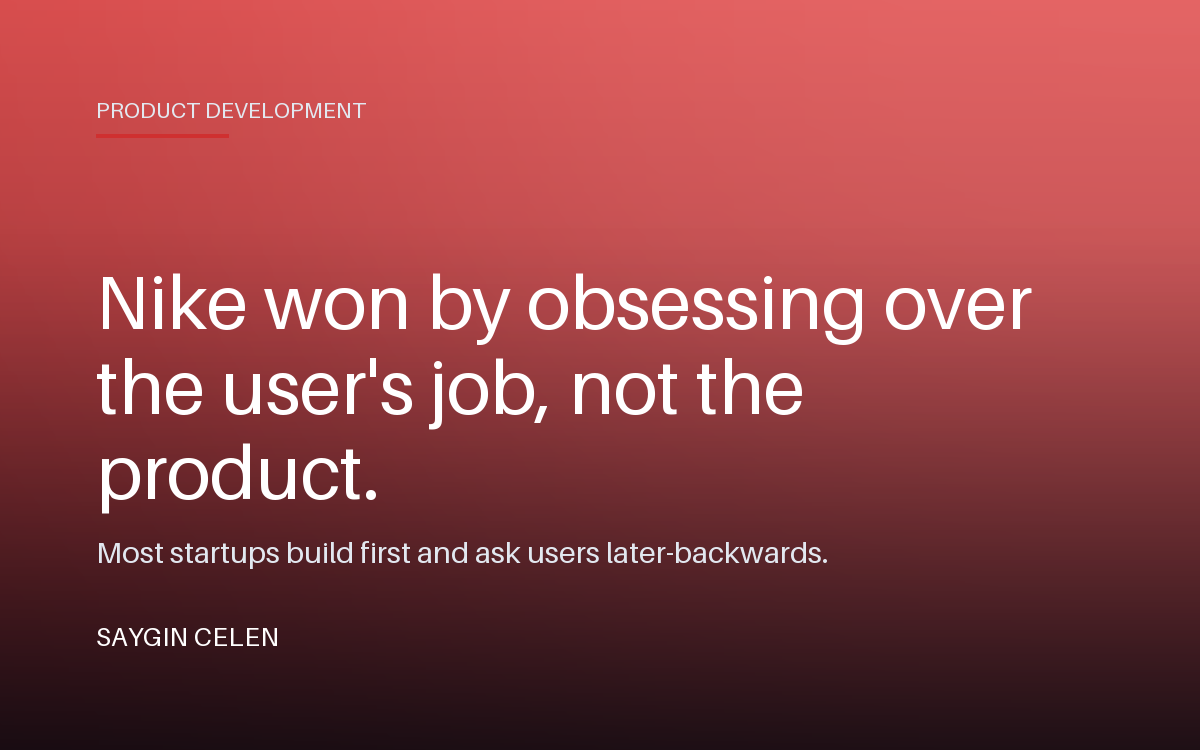
Nike won by obsessing over the user's job, not the product.

Nike won by obsessing over the user's job, not the product.

They won because Phil Knight obsessed over one thing: the user's job. He watched runners. Listened to their pain. Then built shoes around what they actually needed—not what…

Read the post

Nike didn't win because they had the best shoe. They won because Phil Knight obsessed over one thing: the user's job. He watched runners. Listened to their pain. Then built shoes around what they actually needed—not what looked good in a factory. That's product development done right. Most startups reverse it: build first, ask users later. By then, you've shipped the wrong thing. Map the user's job before you code. Everything else follows. #ProductDevelopment #UserCentric #StartupLessons #ProductStrategy #DesignThinking #Innovation

LinkedIn
Most AI fails because founders optimize the tool, not the user's actua

Most AI fails because founders optimize the tool, not the user's actua

Wrong question. The real one is: "What job is the user actually trying to do?" Most startups treat AI as a feature to bolt onto what already exists. It's trendy. It's fast. So…

Read the post

Every founder I advise at Awaynear asks the same thing: "Where do we add AI?" Wrong question. The real one is: "What job is the user actually trying to do?" Most startups treat AI as a feature to bolt onto what already exists. It's trendy. It's fast. So they build a chatbot that sits idle, or dashboards labeled "AI-powered" that solve problems nobody has. I've watched product teams ship AI solutions to problems that don't exist in their users' actual workflows. The result? Features with 2–3% adoption, wasted engineering cycles, and founders confused about why adoption didn't follow. The pattern is always the same: they started with the tool, not the job. Before you integrate any AI, map the user's actual moment of friction. When does your user wish something was faster, smarter, or less repetitive? When would they open this feature unprompted? If you can't answer that precisely, you don't have a job to solve yet. AI is a powerful lever. But it only moves something if you point it at real friction. What's the last AI feature you shipped that actually got used? #ProductStrategy #AI #Startups

LinkedIn
Measure fit, not feelings

Measure fit, not feelings

Here's the gap: you build what you *think* users need. Users need what they *can't live without*. These are rarely the same. Product-market fit isn't a feeling. It's…

Read the post

Most founders I advise are building the wrong thing — not because their engineering is weak, but because they're chasing features before product-market fit exists. Here's the gap: you build what you *think* users need. Users need what they *can't live without*. These are rarely the same. Product-market fit isn't a feeling. It's measurable. When I'm advising startups on product development, I look for three signals: retention curves that flatten high (not drop-off cliffs), NPS above 50, and users who'd genuinely miss you if you disappeared. Most teams I work with have zero data on any of these before shipping their second feature set. Start there instead. The features will follow naturally once you know what actually sticks. #ProductDevelopment #StartupGrowth #PMF

Instagram
Most startups ask: 'How do we add AI?'

Most startups ask: 'How do we add AI?'

Wrong question. Start here instead: 'What user problem does AI actually solve better than the alternative?' AI for…

Read the post

Most startups ask: 'How do we add AI?' Wrong question. Start here instead: 'What user problem does AI actually solve better than the alternative?' AI for AI's sake burns runway. AI solving friction? That scales. #AIStrategy #StartupGrowth #ProductStrategy #TechFounders #StartupTips

Experience

Experience

Credentials

Credentials & Certifications

MBA
Master of Business Administration
MS
Master of Science

By the Numbers

0 to 1
Product Launches
3+
Languages Spoken
MBA
Strategic Acumen
UI/UX
Design Focus
Questions

Questions

What does Saygin Celen work on at SiteNeuro?

At SiteNeuro, Saygin Celen focuses on leading development efforts, integrating design, AI, and strategic writing to build innovative products that help startups grow faster and make a real impact.

What is Saygin's background?

Saygin has a strong engineering background with an MS and MBA, transitioning from Mechanical & Industrial Engineering to UI Design, Web Design Writing, and entrepreneurship. He founded Awaynear, a platform for design, AI, and strategy.

What is Saygin's philosophy on product development?

Saygin is passionate about design thinking and creating products from the ground up, always aiming to deliver maximum value for the end user. This user-centric approach guides all his development efforts.

What kind of impact does Saygin aim to create?

Saygin aims to help startups and innovators build smarter, grow faster, and achieve real, measurable impact through the strategic convergence of design, AI, and writing.

Does Saygin write about his experiences?

Yes, as a Web Design Writer, Saygin shares insights and perspectives on design, AI, and strategy, contributing to the broader conversation around innovation and startup growth.

How can I connect with Saygin Celen?

You can connect with Saygin Celen on LinkedIn or reach out via email for any inquiries or to discuss shared interests.

Elsewhere

Connect

Whether you're exploring new product ideas or looking to refine your growth strategy, I'm always glad to compare notes. Feel free to connect on LinkedIn or drop me a line to start a conversation.

Message Saygin Connect on LinkedIn

Stay in the loop

Every Monday I write Build With AI, Without Code on LinkedIn: one practical lesson on building with AI when you don't code. Prefer email? Subscribe below and I'll send you each issue.

Subscribe